 凯发k8国际
Working Together to Address Challenges and Promote Development — 2026 RCEP Media & Think Tank Forum Held in Haikou
The 2026 RCEP Media & Think Tank Forum, themed “Working Together to Address Challenges and Promote Development”, was held in Haikou, Hainan province, from May 8 to 9. The forum was jointly hosted by China Daily and the China Institute for Reform and Development (CIRD). The forum brought together representatives from mainstream media, think tanks and enterprises from 14 countries, including China, the Republic of Korea, Australia, Brunei, Cambodia, Indonesia, Laos, Malaysia, Myanmar, the Philippines, Singapore, Thailand and Vietnam. Representatives from three international organizations, including the Trilateral Cooperation Secretariat, the ASEAN-China Centre and the International Maritime Organization, also attended the event to exchange views and offer recommendations on jointly addressing global changes and advancing regional cooperation under the RCEP framework.
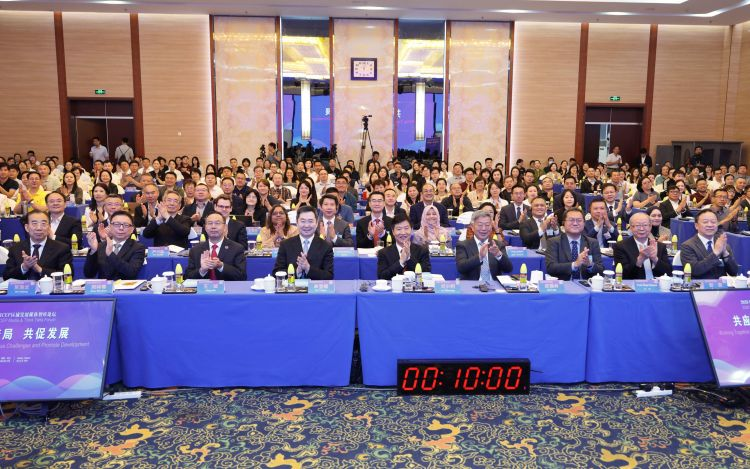
The opening ceremony of the forum was held on the morning of May 9. Liu Xiaoming, Governor of Hainan Province; Qu Yingpu, Publisher and Editor-in-Chief of China Daily; Lv Bin, President of China Oceanic Development Foundation; and Chi Fulin, President of CIRD and President of Hainan Institute for Free Trade Port Studies, delivered speeches at the opening ceremony. Wang Bin, Member of the Standing Committee of the CPC Hainan Provincial Committee, Director General of the Publicity Department of the CPC Hainan Provincial Committee, attended the ceremony. The opening ceremony was moderated by Zhu Baoxia, Deputy Publisher of China Daily.
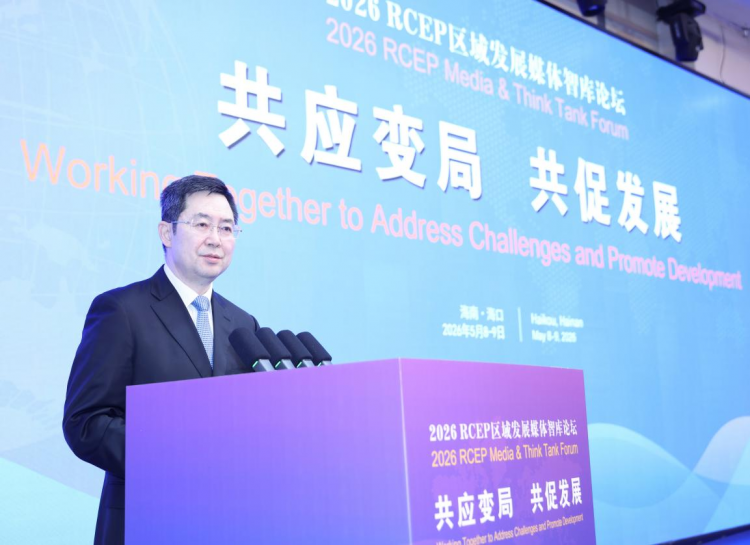
Liu Xiaoming noted that building the Hainan Free Trade Port into a free trade port with Chinese characteristics is a major national strategy personally planned, decided and promoted by President Xi Jinping, and a major move demonstrating China’s resolve to expand opening-up and actively advance economic globalization. Since the launch of island-wide special customs operations, the Hainan Free Trade Port has maintained stable and orderly operations, with initial progress made in facilitating the efficient flow of goods and people, as well as in the aggregation of various flows and resources. Liu said that Hainan stands ready to work with all RCEP parties to expand development space through higher-standard opening-up, inject new growth momentum through deeper cooperation, and jointly forge a new pattern of regional development through closer coordination. He added that media are recorders of the times, while think tanks serve as intellectual engines for development. In advancing the high-quality implementation of the RCEP and the high-standard development of the Hainan Free Trade Port, he expressed the hope that media and think tanks will serve as advisers on rule alignment, communicators of policy dividends, facilitators of industrial coordination, and promoters of people-to-people exchanges.
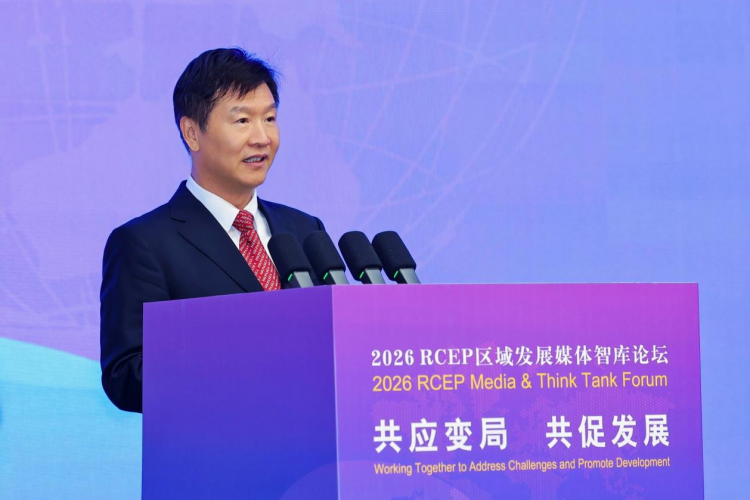
Qu Yingpu said that as global changes unseen in a century are accelerating and the world economy faces mounting challenges, people have gained a deeper understanding of the far-sighted vision embodied in President Xi Jinping’s proposal of “Four Global Initiatives”, as well as the vision of building a community with a shared future for mankind. Qu said that China Daily has always paid close attention to the high-quality development of Hainan, actively supporting and serving Hainan in implementing new measures under national strategies, and has been deeply engaged in the building of the Hainan Free Trade Port International Services portal. He noted that this year marks the fourth anniversary of the implementation of the RCEP and the fifth anniversary of the establishment of the China-ASEAN Comprehensive Strategic Partnership, making it a crucial year for deepening regional cooperation and development. He expressed the hope that media and think tanks from all countries will break barriers through cooperation and promote prosperity through openness and connectivity, deepen mutual trust through exchanges and strengthen public support through closer people-to-people ties, and stimulate vitality through innovation to jointly build a better future. Qu said that China Daily stands ready to work with all parties to contribute more wisdom and strength to jointly addressing global changes, strengthening solidarity and cooperation, and promoting peace and development in the region.
Lv Bin said that the forum, focusing on RCEP regional cooperation amid new geopolitical and economic changes, challenges and opportunities, is of great practical significance. Lv noted that the vast majority of RCEP members are ocean-based economies, and that the ocean plays a vital role in RCEP cooperation and development. As an important social organization in China’s marine sector, the China Oceanic Development Foundation has remained committed to empowering the high-quality development of the RCEP regional economy through blue action. He said that the foundation will first take the blue economy as an important driver to expand new space for industrial cooperation in the RCEP region; second, strengthen regional marine governance capacity through scientific research and rule alignment; third, build open and inclusive blue partnerships based on multilateral cooperation networks; and fourth, promote RCEP regional cooperation under the new circumstances by strengthening think tank collaboration and people-to-people exchanges, and by building important platforms for RCEP cooperation.
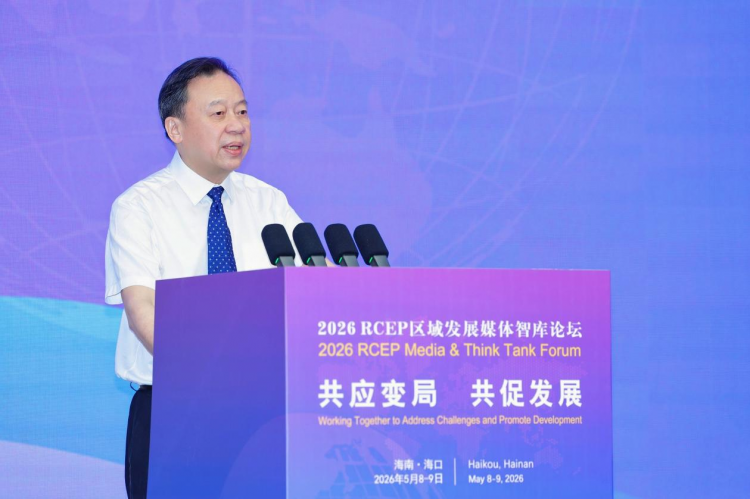
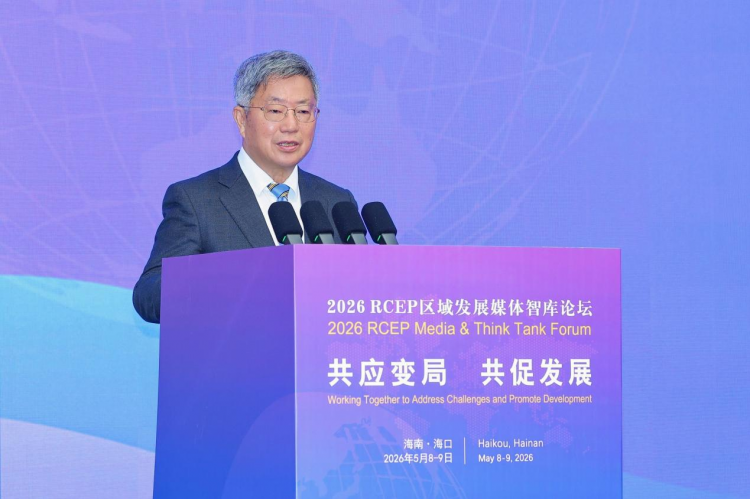
Chi Fulin said that practical measures should be taken to strengthen a development-oriented RCEP, promote the effective connectivity between China’s vast market and the RCEP market, and leverage Hainan Free Trade Port’s strategic role. First, RCEP should strengthen its strategic commitment to a development-oriented approach. In the face of shocks brought by new changes in the geopolitical landscape, economic and trade cooperation should be reinforced, with development remaining the region’s foremost priority. Second, RCEP should strengthen its strategic objective of advancing regional free trade. RCEP should become an important force for advancing global free trade by fully implementing RCEP rules, optimizing the regional network of division of labor and cooperation, and enabling more market entities to share greater benefits. Third, RCEP should strengthen the strategic direction of upgrading to a higher level. This includes promoting deeper market opening, advancing rule upgrading toward higher standards, achieving breakthroughs in membership expansion, and building an effective governance mechanism for RCEP.
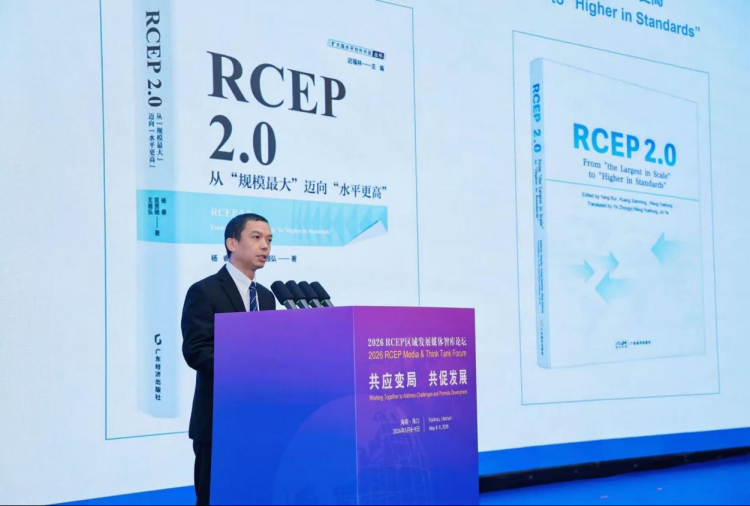
CIRD released a report titled From “the Largest in Scale” to “Higher in Standards”—— Strategic Choices and Practical Actions for Advancing RCEP Upgrading amid Geopolitical Transformations. The report noted that RCEP has made new progress amid global changes and challenges. According to the report, in the face of growing uncertainties, RCEP should move from being “the largest in scale” to becoming “higher in standards”. It called for advancing RCEP Openness 2.0, Rules 2.0, Expansion 2.0 and Governance 2.0, with the goal of building a higher-level free trade platform that is “implementable, monitorable, binding and governable”.
Following the opening ceremony, the forum held a plenary session themed “Upholding RCEP’s Development Orientation and Fostering New Progress in Regional Cooperation”. The session was moderated by Zhou Shuchun, Member of the Standing Committee of the 13th National Committee of the CPPCC and Executive Deputy Director of China Foundation For Human Rights Development. Keynote speeches were delivered by Yose Rizal Damuri, Executive Director of the Centre for Strategic and International Studies, Indonesia; Le Yucheng, Deputy Director-general of the National Radio and Television Administration, Senior International Affairs Expert; Lee Hee-sup, Secretary-General of Trilateral Cooperation Secretariat; Wang Yiming, Former Vice President (Vice Minister) of Development Research Center of the State Council; Xue Lan, Dean of Schwarzman College at Tsinghua University; Kim Do Hoon, Former President of the Korea Institute for Industrial Economics and Trade; Zhang Shaogang, Executive Vice Chairman of APEC China Business Council and Former Vice Chairman of China Council for the Promotion of International Trade; and Chan Aun Kuang, Editor-in-chief of Sin Chew Daily, Malaysia.
Experts attending the forum noted that as the world’s largest free trade agreement, the RCEP has begun to deliver tangible benefits over the four years since its entry into force, and has played an irreplaceable role in advancing Asian economic integration. Against the backdrop of new geopolitical changes in the world, the importance of the RCEP regional economic integration mechanism has become increasingly prominent. Working together to address challenges and promote development, RCEP should deepen internal cooperation, expand cooperation into new areas, and advance both expansion and upgrading, so as to shift from an advantage in economic and trade scale to improvements in function and quality, and move from being the world’s largest free trade area to becoming a high-standard free trade area.
On the afternoon of May 9, the forum also held two thematic dialogues themed “Enhancing RCEP Implementation Effectiveness to Unlock Greater Development Dividends” and “Building Consensus on Its Development and Jointly Elevating RCEP to a Higher Standard”.
Since its launch in 2021, the RCEP Media & Think Tank Forum has been held for six consecutive sessions. The forum has generated extensive and positive impact in giving full play to the role of media and think tanks, and in promoting economic and trade cooperation as well as people-to-people exchanges within the RCEP region.
 官方微信扫一扫
 官方微信扫一扫